

LaxInstanceAwareCounter
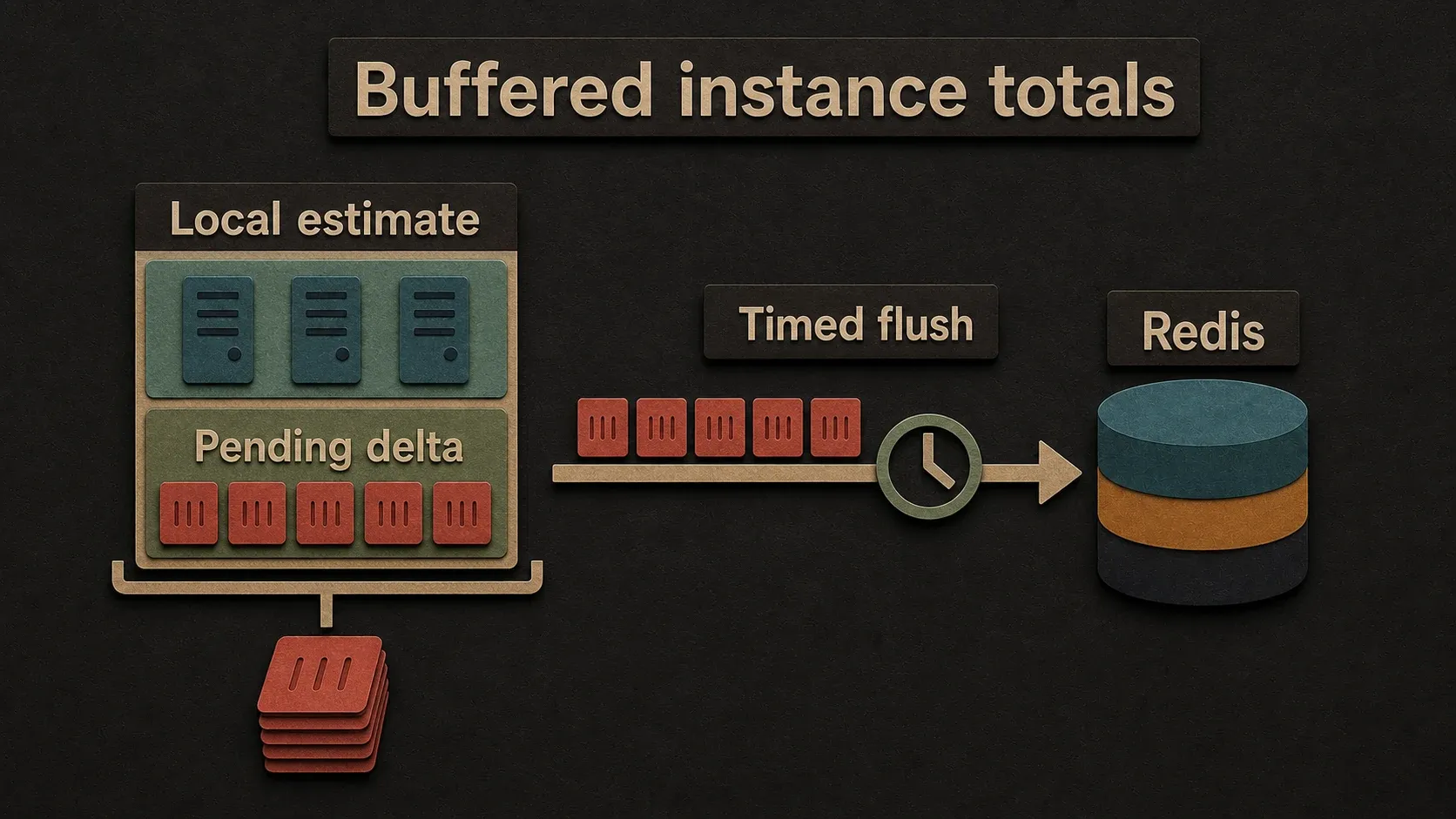
LaxInstanceAwareCounter is a buffered wrapper around StrictInstanceAwareCounter. inc and dec accumulate locally and flush to the strict counter in bulk every flush_interval (default ~20 ms). Global operations (set, del, clear) flush any pending delta first, then delegate immediately.
Reach for it when you have many inc/dec calls per second per node and can tolerate a small consistency lag.
Construct
use std::time::Duration;
use distkit::DistkitRedisKey;
use distkit::icounter::{
    InstanceAwareCounterTrait,
    LaxInstanceAwareCounter, LaxInstanceAwareCounterOptions,
};

let prefix = DistkitRedisKey::try_from("my_app".to_string())?;
let counter = LaxInstanceAwareCounter::new(LaxInstanceAwareCounterOptions {
    prefix,
    connection_manager: conn,
    dead_instance_threshold_ms: 30_000,
    flush_interval: Duration::from_millis(20),
    allowed_lag:    Duration::from_millis(20),
    cleanup_interval: None,
});
LaxInstanceAwareCounterOptions::new(prefix, conn) fills these with defaults if you don't need to tune them.
Operations return the local estimate
let key = DistkitRedisKey::try_from("connections".to_string())?;

// Returns immediately - no Redis round-trip on the warm path.
let (local_total, mine) = counter.inc(&key, 1).await?;
let (local_total, mine) = counter.dec(&key, 1).await?;

// get() also returns the local estimate: the settled total plus this
// instance's pending and in-flight deltas.
let (total, mine) = counter.get(&key).await?;
inc, dec, and get reflect your own deltas immediately, also while a flush has them in the air. A conditional update such as inc_if applies its check and its change in one step, against a value that includes your own deltas. Other instances see them only after the next flush.
Background flushing
Like the lax plain counter, the flush task holds a Weak reference and stops automatically when the last Arc is dropped.
A flush that fails returns its deltas to the buffer, and the next flush sends them again. A flush that a connection failure interrupts is at-least-once: the unconfirmed amount is retried and can apply twice. When the counter is idle, the flush task drains the buffer before it sleeps, and the first write after an idle stretch wakes it at once, so a delta waits at most about one flush_interval plus a Redis round trip.
A slice that reaches 0 leaves no record in Redis, and the shared record goes once no instance holds the key. cleanup_interval on the options sweeps records that older versions left behind; see the strict variant.
Same cleanup semantics
Because it delegates to the strict counter, dead-instance cleanup works exactly as in the strict variant - a node's slice is reclaimed once it stops heartbeating past the threshold.
The same limit for each call applies. One call removes dead instances until it has read approximately 10,000 of their counts.